How to warm up properly before gymnastics: 4 phases that prepare your body to move safely
 Save
A proper warm-up raises your core temperature, activates the muscles you'll use during training and prepares your joints for the range of movement gymnastics demands. The right sequence moves from general to specific, starting with movement that gets your blood flowing and ending with drills that mirror the skills you're about to practise. This guide walks through the four phases of an effective warm-up, explains why dynamic stretching comes before static work, and shows you which areas need the most attention before you start training.
That first paragraph carries the one link to Astral Acrobatics, where you'll find guides on skills, equipment and training methods for people learning gymnastics and acrobatics in the UK.
A complete warm-up has four distinct phases
The structure matters as much as the exercises themselves. Each phase prepares the body for the next, and skipping one leaves gaps in your readiness. Start with pulse-raising activity, move into joint mobility, then dynamic stretching, and finish with skill-specific drills.
The pulse-raising phase gets your heart rate up and blood moving to your muscles. Light jogging, skipping or even a brisk walk around the training space for three to five minutes does the job. You should feel warmer but not tired.
Joint mobility comes next: controlled rotations of the ankles, knees, hips, spine, shoulders and wrists, moving each joint through its full range without forcing. Two or three rotations in each direction, smooth and deliberate. This phase wakes up the connective tissue and reminds your nervous system how each joint moves.
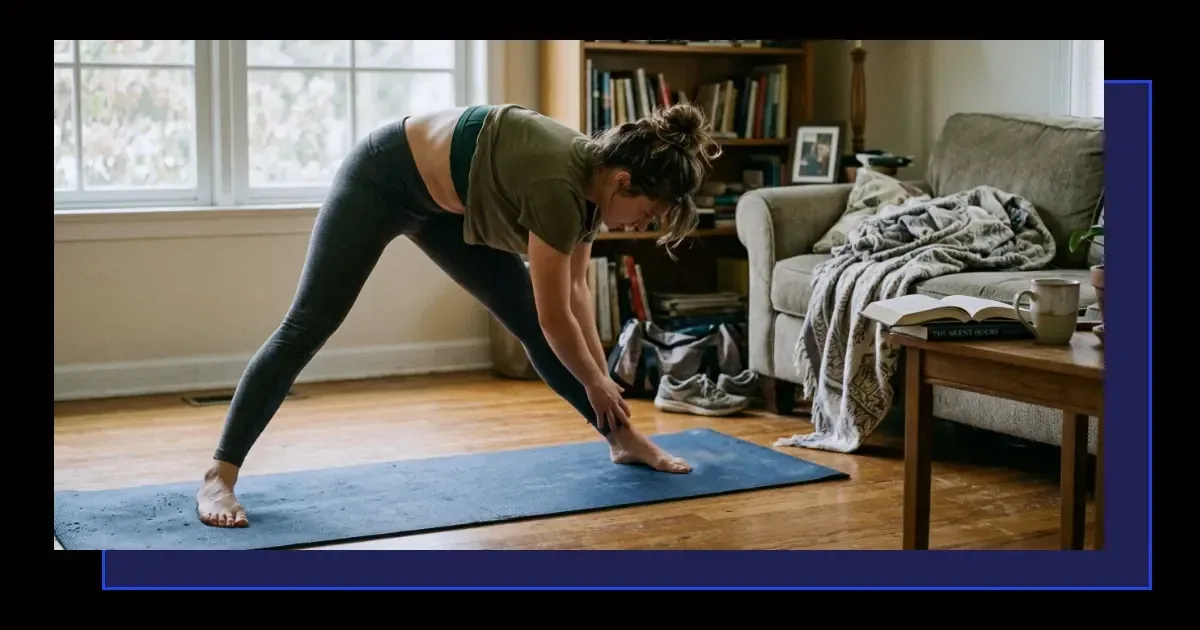
Dynamic stretching follows — movements that take muscles through their range while you're in motion. Leg swings, arm circles, lunges with a twist, and walking toe-touches all belong here. The difference from static stretching is that you never hold a position; you move in and out of it. Dynamic work prepares muscles to contract and lengthen quickly, which is what they'll do during training.
Dynamic stretching comes before static stretching, not after
Static stretching — holding a position for an extended count — has its place, but not at the start of a warm-up. Research shows that static stretching a cold muscle can temporarily reduce its power output and reaction time, neither of which you want before tumbling or working on apparatus. Save static stretches for the end of a session, when your muscles are warm and you're working on flexibility as a separate goal.
During the warm-up, dynamic stretching serves a different purpose. It rehearses the movement patterns you're about to use, activates the muscles in sequence, and increases your range gradually without the temporary weakness that comes from prolonged static holds. A walking lunge with a reach overhead, for example, opens the hip flexors, engages the glutes, and activates the core — all useful for tumbling and beam work.
What dynamic stretching looks like in practice
Choose movements that mirror the demands of your session. Leg swings — forward and back, then side to side — prepare the hips for splits and leaps. Arm circles in both directions warm the shoulders for handstands and bar work. Inch-worms, where you walk your hands out to a plank and then walk your feet up to meet them, activate the hamstrings, shoulders and core in one flowing exercise.
Each movement should be controlled, not rushed. You're teaching your body what it's about to do, not testing how far you can push on the first attempt. Six to eight repetitions of each exercise is enough.
These are the key areas to activate before you start training
Certain muscle groups carry more load in gymnastics than in everyday movement, and they need deliberate attention during a warm-up. The wrists, shoulders, core and ankles all bear weight in ways most people's daily routines don't prepare them for.
Wrists take your full body weight during handstands, cartwheels and any inverted work. Wrist circles in both directions, then gentle flexion and extension with your palms flat on the floor, prepare the small muscles and tendons that stabilise the joint. If your wrists feel stiff or sore, spend extra time here — pushing into a handstand on unprepared wrists invites strain.
Shoulders need both mobility and stability. Arm circles, scapular push-ups (where you protract and retract your shoulder blades while holding a plank), and some light resistance-band pulls wake up the rotator cuff and the muscles that control your shoulder blades. Strong, mobile shoulders protect you on bars, rings and floor work.
The core stabilises everything. Hollow holds, plank variations and a few slow mountain climbers activate the deep abdominal muscles that keep your body tight during skills. A strong, engaged core is what turns separate movements into clean lines.
Ankles absorb the impact of every landing and support your balance on beam. Ankle circles, calf raises and a few single-leg balances prepare the joint and the surrounding muscles for the forces they'll meet. Weak or cold ankles are one of the most common sites of injury in gymnastics, and a few minutes of targeted work makes a measurable difference.
Skill-specific drills close the gap between warm-up and training
The final phase of a warm-up rehearses the movements you're about to practise, at lower intensity. If you're working on cartwheels, a few kick-overs against a wall or some low, controlled cartwheels on a line prepare your body for the full skill. If it's a bar session, a few hollow swings and some supported pull-ups bridge the gap between general preparation and the specific demands of the apparatus.
This phase is short — three to five minutes — and its purpose is to remind your nervous system of the patterns it's about to repeat. You're not chasing personal bests here; you're tuning the connection between intention and movement.
This is what an effective warm-up looks like, start to finish
- Pulse-raising activity: Light jogging, skipping or brisk walking for three to five minutes, until you feel warmer and your breathing has picked up.
- Joint mobility: Controlled rotations of ankles, knees, hips, spine, shoulders and wrists, two or three times in each direction, smooth and deliberate.
- Dynamic stretching: Leg swings, arm circles, lunges with a twist, inch-worms and walking toe-touches, six to eight repetitions of each, moving in and out of each position without holding.
- Targeted activation: Wrist circles and presses, scapular push-ups, hollow holds and ankle circles, spending extra time on any area that feels stiff or weak.
- Skill-specific drills: Low-intensity rehearsals of the movements you're about to practise, three to five minutes, to bridge general preparation and the specific demands of your session.
How long a warm-up should take depends on the session ahead
A light recreational session can follow a shorter warm-up — fifteen to twenty minutes covers the essentials. A harder training session, especially one involving new skills or high-impact work, benefits from a longer warm-up of twenty-five to thirty minutes. The colder the environment or the earlier in the day, the more time you need to reach full readiness.
You should finish the warm-up feeling alert, warm and loose, not tired. If you're breathing hard or your muscles feel fatigued, you've pushed too far. The warm-up prepares you for the work; it isn't the work itself.
Signs you're ready to start training
Your skin feels warm to the touch, you're breathing more deeply than at rest but not labouring, and your joints move freely through their full range. A quick hollow hold or handstand should feel controlled, not shaky. If any area still feels tight or cold, spend another minute or two on it before you move to skills.
Common warm-up mistakes and how to avoid them
Rushing through the sequence is the most frequent error. A warm-up done at speed doesn't give your body time to respond, and you end up starting skills before you're genuinely ready. Slow down, breathe, and treat each phase as deliberate preparation.
Another mistake is repeating the same routine regardless of what the session demands. A floor-heavy session needs more ankle and core work; a bar session needs more shoulder and wrist preparation. Adjust the warm-up to the training ahead, and you'll move better and feel safer.
Skipping the pulse-raising phase and diving straight into stretching is also common, especially when time is short. But stretching cold muscles achieves very little and can increase injury risk. Even a brisk two-minute walk is better than nothing.
When to add equipment to your warm-up routine
A resistance band, a foam roller and a panel mat all have their place in a more detailed warm-up, but none is essential. A band adds resistance to shoulder and hip activation exercises, which can help if you're recovering from an old injury or building strength in a weak area. A foam roller releases tightness in larger muscle groups before you move into dynamic stretching, though it's not a substitute for movement-based preparation.
If you're training at home and want to know which equipment makes home practice safer and more effective, that guide covers the essentials.
A panel mat gives you a slightly softer surface for wrist and ankle drills if you're warming up on a hard floor. None of these tools is necessary for an effective warm-up, but they can make certain exercises more comfortable or more targeted.
Warm-up routines compared: recreational vs competitive training
| Training level | Warm-up duration | Focus | Intensity |
|---|---|---|---|
| Recreational | Fifteen to twenty minutes | General preparation, joint mobility, light dynamic stretching | Low to moderate |
| Intermediate | Twenty to twenty-five minutes | Full four-phase structure, targeted activation of weak areas | Moderate |
| Competitive | Twenty-five to thirty minutes | Sport-specific drills, detailed activation, mental preparation | Moderate to high |
Adjusting your warm-up when you're short on time
When you have less than fifteen minutes, prioritise the areas that will carry the most load in your session. If it's a bar day, spend most of your time on wrists, shoulders and core. If it's floor work, focus on ankles, hips and a few tumbling drills. A short, focused warm-up that hits the right areas is better than a rushed attempt to cover everything.
Keep the pulse-raising phase — even two minutes of jogging on the spot makes a difference — and never skip joint mobility for the wrists and ankles. Those two joints are where most gymnastics injuries happen, and cold, stiff connective tissue tears more easily than warm, mobile tissue.
What to leave out when time is tight
Static stretching can go. It belongs at the end of a session, not the start, and dropping it from a hurried warm-up has no downside. The final skill-specific drills can also be shortened or folded into your first working set, as long as you start that set at low intensity. What you cannot afford to skip is the pulse-raising phase, joint mobility and some form of dynamic movement.
Listening to your body changes what the warm-up needs to be
Some days you'll feel stiff, cold or tired before you even start. On those days, the warm-up needs to be longer and gentler, with more time spent on mobility and activation and less on drills. Pushing into skills when your body isn't ready increases injury risk and makes training less productive.
Other days you'll feel loose and energised from the start. You still need a warm-up, but it can be shorter and more dynamic. The structure stays the same; the duration and intensity adapt to how your body feels. Learning to read those signals and adjust accordingly is part of training intelligently.
If you're working on grips for bar work, make sure your hands and wrists are fully warm before you put the grips on, and break them in gradually if they're new.
#Warm-up #Flexibility #Conditioning
Download PDF: Gymnastics warm-up checklist PDF, 29 KB
Further reading
Frequently asked questions
What is the difference between dynamic and static stretching?
Dynamic stretching involves moving in and out of a stretched position, preparing muscles to contract and lengthen quickly. Static stretching holds a position for an extended count and is best saved for the end of a session, as it can temporarily reduce power output if done before training.
How long should a gymnastics warm-up take?
A recreational session benefits from fifteen to twenty minutes of warm-up, while harder training or competitive sessions need twenty-five to thirty minutes. The colder the environment or the earlier in the day, the more time you need.
What are the most important areas to warm up before gymnastics?
Wrists, shoulders, core and ankles all need targeted attention, as they carry more load in gymnastics than in everyday movement. Spending extra time on any area that feels stiff or weak reduces injury risk and improves performance.