How to do a cartwheel: 6 steps from your first kick-over to a straight line
 Save
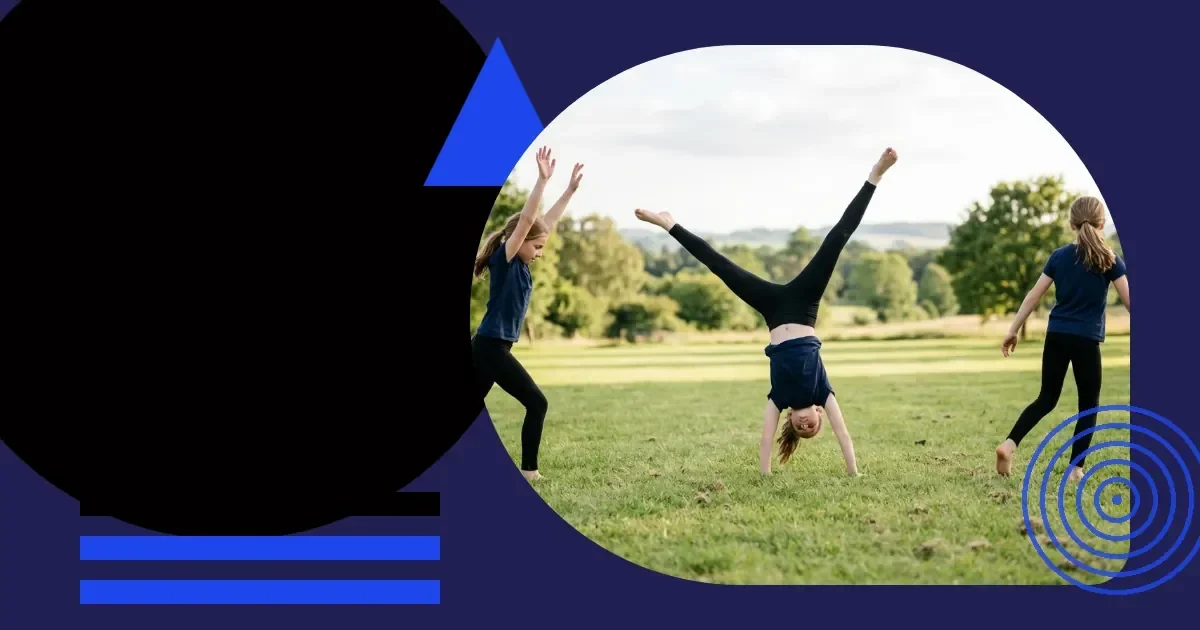
A cartwheel is a sideways rotation where your hands and feet touch the ground one at a time, forming a wheel shape as you pass through an inverted position. The movement builds coordination, spatial awareness and confidence in being upside down. Once you understand where your hands go and how your legs follow, you can practice the cartwheel anywhere with enough clear floor space, and Astral Acrobatics walks you through each part of the skill so you know exactly what to do.
The shape you are making
Picture a straight line on the floor. Your hands and feet land on that line in turn: one hand, then the other, then one foot, then the other. Your body rotates sideways through a brief handstand, and you finish standing where you started but facing the opposite direction.
Most people start by stepping into the cartwheel rather than running, because a walk gives you time to place each hand deliberately. Speed comes later. Right now the goal is to understand the sequence and to trust that your legs will clear the ground when you push.
Where your hands go
Stand sideways to the line you are following. If you lead with your left leg, your left hand will land first, then your right hand. The two hands sit roughly shoulder-width apart on the line, fingers spread and pointing away from the direction you came from.
Your first hand reaches for the floor before your second hand leaves your side. There is a moment when one hand is down and the other is still in the air, and that moment is when your legs begin to lift. If both hands land at once, you will struggle to generate the rotation you need.
Many beginners place their hands too close together or let the second hand drift off the line. Keep the width of your shoulders between them, and imagine you are drawing a ruler on the floor with your palms.
How your legs move through the skill
Your lead leg kicks upward as your first hand touches down. The back leg follows immediately, sweeping over your head while you are inverted. The two legs pass through a split position in the air, and each one lands in the order it lifted.
The kick from your lead leg is what powers the cartwheel. A weak kick leaves you stuck with both feet on the ground and all your weight on your hands. A strong kick lifts your hips over your shoulders and carries you to the other side.
Your legs should stay straight and active throughout. Bent knees make the skill harder to control, and a tucked shape prevents you from finding the line you are traveling along.
Six steps to practice today
- Mark a line on the floor with tape or chalk, or use a floorboard seam. Stand sideways to it and step your lead foot onto the line, checking that you can reach forward comfortably without leaning too far.
- Place your first hand on the line while your lead foot is still grounded. Your arm should be straight, your fingers spread, and your shoulder directly over your wrist. Hold that position for a moment so you feel where your weight sits.
- Kick your lead leg upward as you shift your weight fully onto that first hand, then plant your second hand on the line. Both hands are now down, shoulder-width apart, and your legs are beginning to lift.
- Let your back leg follow your lead leg so both legs are in the air at once, split wide and passing over your head. Your body is inverted and your hips are stacked over your hands.
- Land your lead foot on the far side of your hands, still on the line, and push off both palms so your torso lifts upright. Your back leg is still in the air.
- Bring your back foot down to meet your lead foot, finishing in a standing position with your chest facing the direction you started from. Your arms can stay overhead or drop to your sides.
Common mistakes and how to fix them
Placing your hands off the line makes the cartwheel crooked. Your legs will land wide of each other, and you will finish facing a different direction than you intended. The fix is to watch your first hand as it reaches for the floor and to keep your second hand in line with it.
Bending your arms as you pass through the inverted position drops your shoulders toward the floor and stops your legs from clearing your head. Straight arms are not about strength; they are about structure. If you cannot hold your weight on straight arms in a static position, spend time in a plank or a downward dog before attempting the cartwheel.
Looking at your feet instead of your hands turns your head away from the direction of travel and pulls your alignment out of the line. Your gaze should follow your lead hand to the floor, then shift to the space between your hands as you invert, then move to the spot where your lead foot will land. Your head is the last part of your body to rotate.
Building the strength you need
A cartwheel asks your shoulders and core to support your full body weight for a brief moment. If that feels impossible, you can build the necessary strength without attempting the full skill.
Hold a plank position on your hands for twenty to thirty seconds, keeping your shoulders directly over your wrists and your body in a straight line. Repeat that three or four times, resting between holds. Once a plank feels manageable, try shifting your weight from one hand to the other while keeping both hands on the floor.
A wall-supported handstand also prepares you for the inverted position of the cartwheel. Kick up so your heels rest against a wall, and hold that shape for ten to fifteen seconds. Your hands should be a few inches from the wall, and your body should form a straight line from wrists to heels. The sensation of being upside down with your weight on your hands is exactly what you will experience in the middle of the cartwheel.
How to know when you are ready to speed up
Once you can perform a slow, controlled cartwheel along your marked line and land with your feet on the same line as your hands, you are ready to add momentum. A faster cartwheel requires the same hand placement and leg sequence, but the kick becomes more powerful and the time spent inverted shortens.
Start with a small jog rather than a full run. Your lead foot should land on the line just before your first hand touches down, and your kick should be sharp enough to carry you through the rotation without pausing at the top. The shape of the skill stays the same; only the speed changes.
| Progression | Focus | What it builds |
|---|---|---|
| Hands only, no kick | Hand placement on the line | Confidence in where your hands land |
| Kick to split, hold | Inverted balance | Control in the middle of the skill |
| Full cartwheel, slow | Landing on the line | Coordination of the entire sequence |
| Cartwheel with momentum | Smooth rotation | Flow between the parts |
Practicing without a mat
You do not need a gymnastics mat to learn a cartwheel, but you do need a surface with enough grip that your hands will not slide. A wooden floor, short carpet or outdoor grass all work well. Slippery tiles and polished concrete do not.
Bare feet give you better feedback than socks or shoes, and they let you feel the floor as you land. If you are practicing on a hard surface and you are worried about your wrists, spend time warming them up first: make circles with your hands, press your palms together and gently lean your weight forward, and practice bearing weight on your hands in a plank position before you attempt the cartwheel.
If you want guidance on setting up a safe space at home, the six pieces of equipment that make home practice safer and more effective covers the basics without requiring a large budget or a dedicated room.
What to do when you lose your nerve
Fear of being upside down is common, and it is not a sign that you are incapable of the skill. The sensation of inverting is unfamiliar, and your brain is wired to protect you from falling. The way through is not to ignore the fear but to build trust in smaller pieces.
Spend time in a downward dog position, where your hips are high and your head is below your heart but your feet are still grounded. Then try a supported handstand against a wall, where you can stay inverted as long as you need to and come down whenever you choose. Once being upside down feels less urgent, the cartwheel becomes easier to attempt.
If your hands hurt after a few attempts, you may be landing too heavily on your palms or locking your elbows too hard. Keep your fingers active and spread wide, and think of your hands as springs that absorb your weight rather than posts that stop it. What gymnastics grips are and when you need them explains how hand care works for skills that place repeated load on your palms.
Checking your alignment from the side
Ask someone to watch your cartwheel from the side and tell you whether your body forms a straight line as you pass through the inverted position. Your hips should stack over your shoulders, and your legs should reach their split at the highest point of the rotation.
If your hips sag toward the floor, your core is not engaged. Before your next attempt, pull your belly button toward your spine and squeeze your legs together as though you are holding a piece of paper between your inner thighs. That tension should carry through the entire skill.
If your legs bend or tuck as you invert, you are likely hesitating mid-rotation. Commit to the kick from the moment your first hand touches down, and trust that your legs will clear your head if you keep them active and straight.
Take one step this week
You do not need to master the cartwheel in a single session. Mark a line, place your hands on it three or four times without kicking, and notice where your weight shifts. That alone is progress.
- Find a clear space and mark your line with tape or use a floorboard edge.
- Practice hand placement ten times, checking that your hands land shoulder-width apart.
- Kick your lead leg upward three or four times, even if your back leg stays grounded.
- Hold a plank for twenty seconds to build the shoulder stability you need.
#Cartwheel #Handstand #Beginner
Download PDF: Your first cartwheel checklist PDF, 28 KB
Further reading
Frequently asked questions
What is the easiest way to start learning a cartwheel?
Mark a straight line on the floor and practice placing your hands on it, shoulder-width apart, before you attempt the kick. Once your hands land in the right place consistently, add the leg movement.
How do you keep your legs straight during a cartwheel?
Squeeze your legs as though you are holding something between your inner thighs, and point your toes throughout the skill. Active legs stay straight; relaxed legs bend.
What do you do if you are scared of going upside down?
Practice a wall-supported handstand first, where you can hold the inverted position for as long as you need and come down in your own time. Familiarity with being upside down removes most of the fear.