How to start gymnastics as an adult: 4 decisions that put you in the gym with confidence
 Save
Starting gymnastics as an adult means learning movement skills most people assume belong to childhood, and the question isn't whether you can—it's how to begin without injury and with realistic expectations. Astral Acrobatics walks you through the practical steps: finding the right class, understanding what your first sessions will ask of you, and building strength safely. You'll finish this guide knowing where to look, what to bring, and how to measure progress on a timeline that respects your body.
Finding adult gymnastics classes near you
Most gymnastics clubs run recreational adult sessions separately from children's classes, often in the evening. Search for "adult gymnastics" with your town or postcode, and check the websites of local clubs affiliated with British Gymnastics—the national governing body lists clubs by region. Some offer drop-in sessions; others run termly courses with enrolment.
Ask three questions before you book: whether beginners are welcome, what the coach-to-participant ratio is, and whether the club has equipment for adults. A class designed for adults will have crash mats, a sprung floor and apparatus adjusted for taller bodies. Avoid open-gym sessions until you've had coached instruction—unsupervised attempts at new skills lead to injury.
University clubs sometimes accept community members, and parkour or freerunning gyms often teach foundational tumbling. If no dedicated adult gymnastics exists nearby, look for acrobatics or trampolining classes; the conditioning and body awareness transfer directly.
What to expect in your first few sessions
Your first class begins with a structured warm-up: joint rotations, dynamic stretches and exercises that prepare your wrists, ankles and shoulders for load. How to warm up properly before gymnastics explains the four phases in detail, and you'll recognise them in every session you attend.
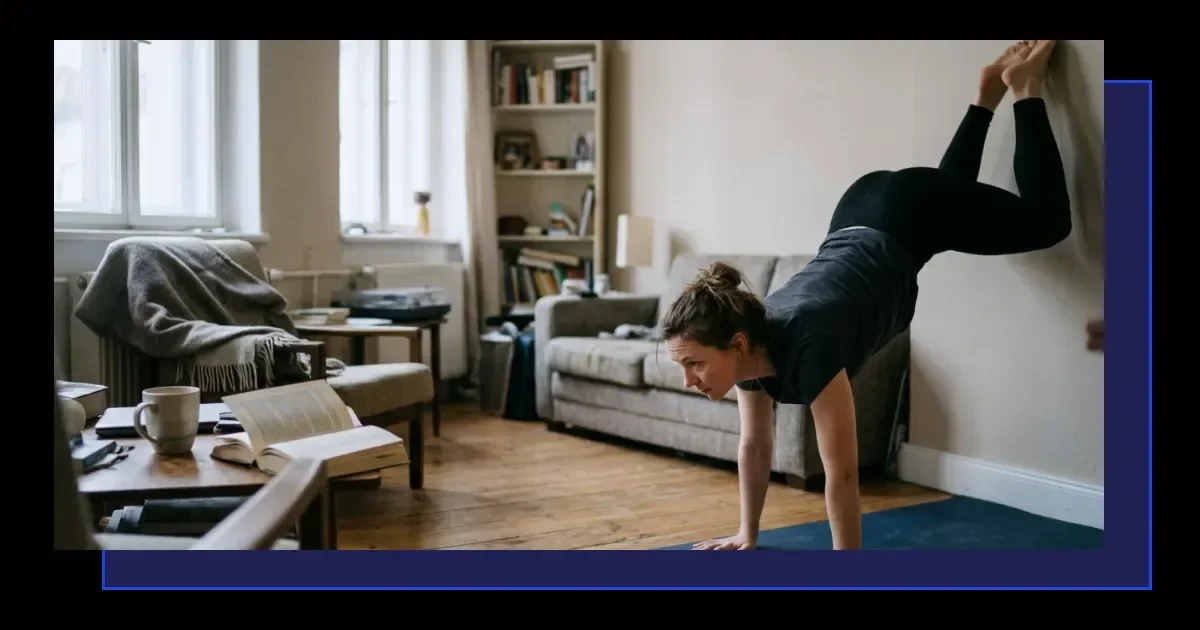
The coach introduces basic shapes and positions—hollow hold, arch, tuck, straddle—then applies them to simple movements such as forward rolls, balance-beam walks or supported handstands against a wall. You'll spend more time conditioning than tumbling: wrist push-ups, scapular exercises and core drills that build the stability gymnastics demands. Progress is slow, deliberate and safer than attempting skills without the strength to control them.
Expect soreness in muscles you didn't know you had. Gymnastics recruits stabilisers around your shoulders, hips and spine that everyday movement rarely challenges. The soreness peaks around the second day and fades within a week as your body adapts.
What to wear and bring
Wear close-fitting clothing that doesn't ride up or catch on equipment: leggings or shorts and a fitted T-shirt work well. Train barefoot or in gymnastics slippers—socks slip on mats and apparatus. Tie long hair back securely.
Bring water and a small towel. Remove all jewellery—rings, bracelets and watches catch on bars and cause finger injuries. Some adults prefer wrist supports or ankle tape; ask your coach before using either, because poorly applied tape restricts movement and creates false confidence.
Addressing fear and building confidence safely
Most adults starting gymnastics carry a fear of falling or of looking foolish. Both are manageable. Classes teach progressions: you master a movement at one height or speed before advancing. A cartwheel, for instance, begins with a kick-over against a wall, then moves to a panel mat, then to the floor. Each step gives you a exit if you lose balance.
Spotting—physical support from a coach—is standard for new skills. The coach's hands guide your hips or shoulders through the movement, reducing the fear of inversion or rotation. As your strength and spatial awareness improve, spotting becomes lighter and eventually unnecessary.
Mental blocks happen when your body has the strength for a skill but your mind resists. Coaches recognise this and adjust the drill: lowering the height, adding a soft landing surface, or breaking the movement into smaller parts. Progress isn't linear; some weeks you refine what you already know rather than learn something new.
The fitness you need and the fitness you'll build
You don't need to be fit before starting—you become fit through training. Gymnastics develops relative strength: the ability to control your own bodyweight through a full range of motion. That differs from lifting heavy weights or running long distances; a strong gymnast may struggle with a marathon, and a runner may find a handstand impossible.
Your first months build foundational strength. Hollow holds, planks, scapular push-ups and leg lifts condition your core and shoulders. Flexibility training happens alongside strength work—one without the other creates imbalance. A flexible gymnast without strength cannot hold a split; a strong one without flexibility cannot achieve the shapes the discipline requires.
Expect progress in weeks, not days. Wrist strength takes time to develop, because everyday life rarely loads the wrists in extension. Ankle stability improves with barefoot landings. Core endurance grows through repetition. Patience is the single most useful quality an adult beginner can bring.
How often to train
Two sessions a week gives your body time to recover while maintaining momentum. Training once a week slows progress; training four or five times increases injury risk without proportional benefit. Rest days matter—muscle fibres repair and strengthen between sessions, not during them.
If you want to practise at home, focus on conditioning rather than new skills. Home gymnastics equipment covers the basics, but attempting inverted skills without mats or spotting is dangerous. Use home time for flexibility, hollow holds and wrist preparation.
Common concerns and how to work with them
Age and injury history. Starting at thirty, forty or fifty is practical if you respect your body's limits. Older joints need longer warm-ups and more gradual progressions. If you have a history of wrist, shoulder or knee injuries, tell your coach before the first session—they'll adapt drills to avoid aggravating old damage.
Bodyweight and strength. Gymnastics is accessible at any size, though a higher bodyweight requires proportionally greater strength to perform certain skills. Coaches modify movements to suit your current capability: a tucked cartwheel before a straight-leg one, a box handstand before a freestanding attempt. Progress depends on consistent effort, not on your starting point.
Comparison with younger participants. Some adult classes mix ages and abilities; others separate beginners from those returning after years away. Either way, comparing yourself to a teenager or a former competitive gymnast is unproductive. Your progress is yours—measured against where you were a month ago, not against the person on the next mat.
Steps to take this week
- Search for adult gymnastics classes in your area using British Gymnastics' club finder or local sports directories, and contact two clubs to ask about beginner sessions.
- Book a trial class or a drop-in session—most clubs allow you to try once before committing to a course.
- Prepare your kit: close-fitting clothes, a water bottle, and a hair tie if needed; remove jewellery the night before so you don't forget.
- Set one small goal for your first month—holding a ten-second hollow hold, completing a forward roll with control, or balancing on a low beam—and track it without pressure.
Measuring progress without frustration
Gymnastics rewards small, cumulative gains. You won't land a back handspring in your first term, but you will notice stronger wrists, better balance and more control over how your body moves through space. Keep a simple log: the skills you drilled, the exercises that felt easier than last week, and any new shapes your coach introduced.
Avoid fixating on a single skill—progress in conditioning and flexibility underpins everything else. A stronger hollow hold translates to a straighter handstand; better ankle mobility improves your landings. The discipline is a web of interdependent movements, and strengthening one thread tightens the whole structure.
Celebrate what your body can do now that it couldn't a month ago. Adult beginners often underestimate how much they've learned because the gains are incremental. Film yourself occasionally—not to critique, but to see the difference between your first cartwheel and your twentieth.
#Beginner #Conditioning #Flexibility
Download PDF: Your first month of adult gymnastics PDF, 28 KB
Further reading
Frequently asked questions
Can I start gymnastics if I've never done it before and I'm over thirty?
Yes. Adult gymnastics classes are designed for beginners, and many participants start in their thirties, forties or older. Coaches teach safe progressions that respect your current strength and flexibility, and progress happens at your own pace.
What do adult gymnastics classes involve?
Classes begin with a warm-up, then move to conditioning exercises that build wrist, core and shoulder strength. You'll learn basic shapes and movements such as rolls, balance work and supported inversions, with skills introduced gradually and always with coaching support.
How long does it take to learn basic gymnastics skills as an adult?
A forward roll with control might take a few weeks; a confident cartwheel often takes several months. Progress depends on how often you train, your starting strength and flexibility, and how quickly your body adapts. Small gains add up over time rather than appearing suddenly.