How to teach your child a forward roll: four steps that work
 Save
A forward roll is one of the first skills children learn in gymnastics, and you can teach it at home with a soft surface and your hands ready. The movement builds body awareness and prepares your child for more complex skills later. Below you will find the surface you need, how to guide them through the roll and what to do when they hesitate.
The surface matters more than you think
Your child needs a surface that absorbs impact without being so soft they sink into it. A gymnastics panel mat or a folded duvet on carpet gives enough cushioning. Avoid bare floors, thin yoga mats or beds — the first offers no give, the second compresses too quickly, and the third makes the movement unpredictable.
The space should let your child roll forward without hitting furniture. Two metres of clear floor in each direction is enough. Check the area for toys, sharp edges and anything they could reach during the roll.
When the floor is too hard
If your floor has no carpet and you have no mat, stack two thick blankets and fold them twice. The padding will flatten with use, so check it between attempts. A surface that looked soft at the start may feel hard after three rolls.
Breaking the movement into parts your child can see
Start by showing them the shape. Sit on the floor, tuck your knees to your chest and wrap your arms around your shins. That tucked position is what their body makes during the roll. Let them copy it while sitting still.
Then move to a squat. From standing, they lower into a crouch with their hands flat on the mat, fingers pointing forward, shoulder-width apart. Their chin drops to their chest. This is the start position, and they should feel steady in it before going further.
The push and tuck
The roll begins when they push gently with their feet and let their weight shift onto their hands. Their head stays tucked — they look at their knees, not at the ceiling. The back of their shoulders touches the mat first, then their back rolls through, and their feet come down on the other side.
Walk them through it once without rolling. Place their hands, check their chin is down, and let them rock forward slightly so they feel the weight shift. Repeat this until the position feels familiar.
Four steps to guide them through the first roll
- Check the tucked position. Ask them to show you the tight ball shape while sitting. Their knees should touch their chest, and their chin should stay down. Correct the position if their head lifts or their legs straighten.
- Set the hands and head. In the squat, their hands go flat on the mat and their chin touches their chest. Stand beside them and place one hand lightly on their upper back. Tell them you are there to guide, not to lift.
- Start the roll. Ask them to push gently with their feet. As their weight shifts forward, guide their shoulder to the mat with your hand. Keep your other hand ready near their lower back. They should roll over the curve of their upper back, not the top of their head.
- Let them finish. Once they are past the halfway point, step back. Their momentum will carry them through, and their feet will come down naturally. If they stop mid-roll, place your hands under their hips and help them complete it.
What spotting means here
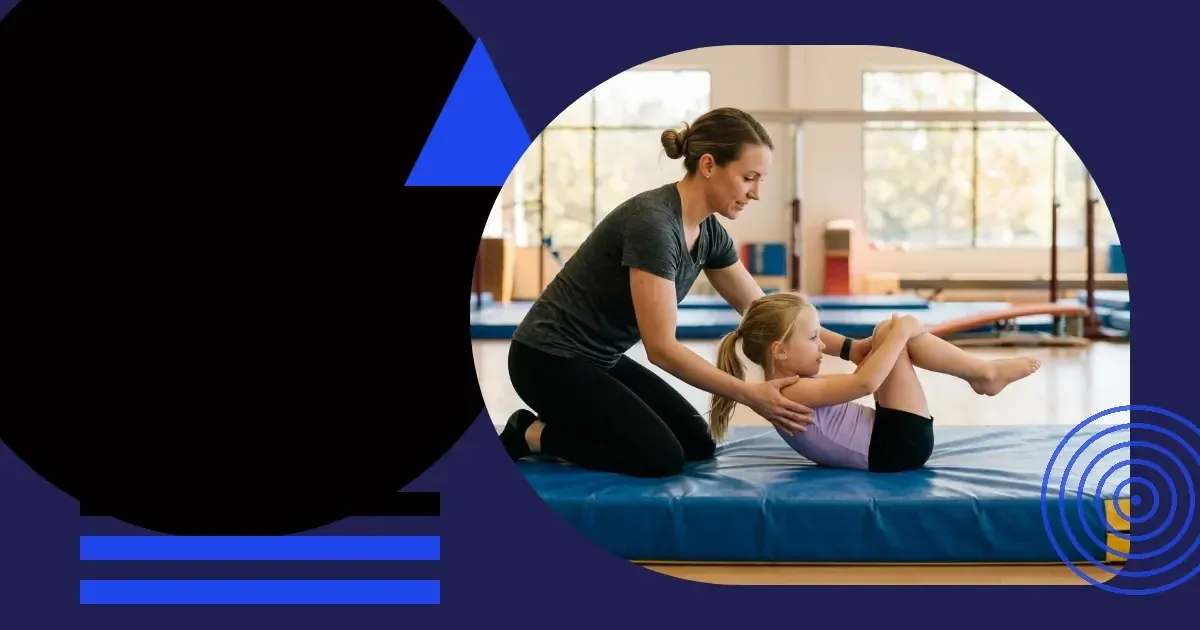
Your hand on their back guides the roll without controlling it. You are not lifting them or pushing them over — you are showing their body which way to go. Astral Acrobatics explains what a spotter does in gymnastics and when their hands make the difference across different skills, and the same principle applies here: contact that reassures without taking over.
Place one hand between their shoulder blades and the other near their lower back. As they tip forward, the first hand guides their shoulder to the mat. The second hand stays ready in case they hesitate or lose balance. Once the roll is moving, let go.
When to step in
If their head goes down too early or they try to roll onto the top of their skull, stop them before they start. Reset the position, remind them to tuck their chin and try again. A forward roll that lands on the head instead of the upper back can hurt, and your child will remember that feeling.
Common fears and what they mean
Many children hesitate the first time they tip forward. That pause is not defiance — it is their brain protecting them from a movement they have never made before. Acknowledge the feeling without dismissing it, and let them sit in the start position until they feel ready.
Some children worry they will fall on their face. Show them that their hands and tucked chin prevent that. Others dislike the feeling of going upside down. Let them rock forward in the squat without rolling, so they feel the shift in balance without committing to the full movement.
How long to wait
If they are not ready after two or three sessions, leave it. Forward rolls are not urgent. Come back to it in a week or two, and the movement may feel easier. Forcing the attempt will make the next one harder.
Surfaces, alternatives and progressions compared
| Surface | Best for | Drawback |
|---|---|---|
| Panel mat or gymnastics mat | Consistent cushioning, stable surface | Cost and storage |
| Folded duvet on carpet | Available at home, soft enough | Flattens with use |
| Stacked blankets | Quick to set up | Shifts during the roll |
| Grass outdoors | Free, natural give | Uneven, may be damp |
What comes after the first successful roll
Once your child can roll from a squat without your hands, ask them to try it from standing. They lower into the squat, then roll as before. The movement stays the same — only the start position changes. After that, work on rolling in a straight line. Place a piece of tape on the floor and ask them to roll along it without drifting to one side.
Forward rolls lead to backward rolls, cartwheels and eventually aerials. Each skill builds on the one before, and the tucked shape they learn here will reappear throughout their gymnastics training. You can read more about six basic gymnastics skills that build everything else, all of which share the same need for control and body awareness.
When something goes wrong
If your child rolls to one side, check their hand placement. Uneven hands will steer the roll. If they land hard on their back, they may be pushing too hard with their feet or not staying tucked. Slow the movement down and break it into parts again.
Wrist discomfort after several rolls usually means they are locking their elbows or landing with straight arms. Teach them to keep a slight bend in their elbows throughout. Persistent wrist pain is a reason to stop and rest — repeated impact on a developing joint needs time to recover. Our guide on four ways to protect your wrists before pain forces you to stop training covers what to watch for and when to ease off.
Neck stiffness
If your child complains that their neck feels sore, they may have rolled over the top of their head instead of their upper back. Go back to the tucked position and emphasise looking at their knees. Their chin should stay on their chest until the roll is complete.
Signs your child is ready to learn without you
When they can roll three times in a row without your hands and land on their feet each time, they have the movement. When they can roll in a straight line and stand up without using their hands, they are ready to practise alone. At that point, your role is to watch and correct small details — hand position, tuck tightness, the line they follow.
Let them show you rather than asking them to perform. Children who feel tested often tighten up. Children who are simply rolling because they want to will show you what they can do without hesitation.
#Forward roll #Spotting #Home practice
Download PDF: Teaching Your Child a Forward Roll: Steps to Print PDF, 30 KB
Frequently asked questions
What age can a child learn a forward roll?
Most children can learn a forward roll between the ages of three and five, once they have the coordination to tuck their chin and push with their feet. Some younger children manage it, and some older children need more time — readiness depends on their confidence and body awareness, not a fixed age.
How do you teach a forward roll for kids who are scared?
Let them practise the tucked position while sitting, then rock forward in a squat without rolling. Keep your hand on their back so they feel supported, and let them control when the roll happens. If they are not ready after a few attempts, stop and come back to it another day.
Can you teach a forward roll on a soft bed?
A bed is too soft and too high. The unstable surface makes the roll unpredictable, and falling off the edge is a real risk. Use a mat or folded duvet on the floor instead, where the surface is firm enough to support the movement and low enough to be safe.